You've won the game!
Klondike Solitaire is the version most people mean when they say “solitaire.” It’s the timeless one-player card game where you sort a full deck into four foundation piles (one per suit), building from Ace to King. Over the years, Klondike Solitaire became the default “classic” because it’s simple to learn, satisfying to solve, and offers a mix of luck + skill that keeps every game interesting. It also gained huge popularity after being included on computers for decades, which helped make Klondike Solitaire the best-known solitaire variant in many countries.
Your mission in Klondike Solitaire is to move all 52 cards to the four foundations, each built Ace → King in the same suit.
When you play Klondike Solitaire, you’ll see these parts:
You may see the name written as solitaire klondike or “Klondike (solitaire).” In many places, “Solitaire” is used as a broad category, and Klondike Solitaire is the most famous member of that category.
People keep coming back to Klondike Solitaire because:
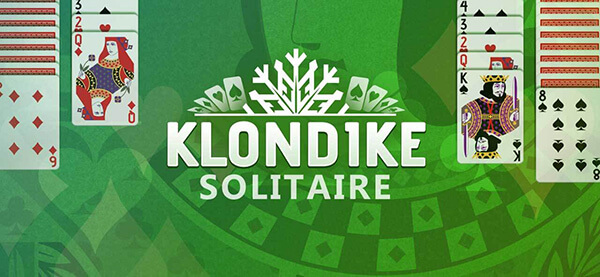
If you’ve ever searched Klondike Solitaire green felt, you’ve probably seen the classic look: a green table background, neat columns, and four foundation spots. The good news: the visuals change, but the rules of Klondike Solitaire stay the same whether you play with a “green felt” theme, a wood theme, or on real cards.
A standard Klondike Solitaire game uses a regular 52-card deck (no jokers). After shuffling:
All remaining cards become the stock (face-down draw pile).
In Klondike Solitaire, foundations are built:
Aces are the starting point. If you can move an Ace to a foundation early, it often helps—but not always (more on that in tips).
In the tableau, you build cards like this:
Example: you can place a red 6 on a black 7, then a black 5 on that red 6.
A key skill in Klondike Solitaire is moving runs of face-up cards between tableau columns—if the run follows the same descending + alternating color pattern. This is how you uncover face-down cards and create space for bigger moves.
If a tableau column becomes empty:
This is one of the biggest strategic moments in Klondike Solitaire: creating an empty column at the right time can unlock the whole game.
When you can’t (or don’t want to) make a tableau move:
This is where “Turn One” and “Turn Three” rules come in.
Many players specifically search for klondike solitaire turn one because it’s the most beginner-friendly format and feels more “winnable.” In Klondike Solitaire Turn One, you draw one card from the stock at a time, so you see more options and can react faster.
Use this flow when playing Klondike Solitaire:
Start by looking for:
Rule of thumb: in Klondike Solitaire, flipping hidden cards usually beats “pretty moves” that don’t reveal anything.
Make descending, alternating-color stacks whenever it helps you:
If you have two similar moves, prefer the one that flips a card.
Yes, foundations are the goal. But sometimes moving a card to a foundation too early can reduce your tableau flexibility (because you might need that card to build a run in the tableau first). Strong players of Klondike Solitaire treat foundations as progress and as a resource.
In klondike solitaire turn one, draw one card:
Because you draw one at a time, you get more chances to place specific cards sooner—this is why many people prefer for klondike solitaire turn one online.
Different websites/apps allow different “passes” through the deck. Some allow unlimited recycling; others limit it (one pass, three passes, etc.). This single setting can massively change difficulty.
Now the big comparison: Turn One (Draw 1) vs Turn Three (Draw 3).
Turn Three means you flip three cards from the stock at a time, and typically only the top of those three is playable at first, which makes options more limited.
Turn One is generally easier because you can access each stock card more directly.
Many modern “free play now” sites let you pick both modes (Turn 1, Turn 3, and sometimes double klondike).
Based on large game datasets shared by major online solitaire platforms, Turn One win rates are higher than Turn Three (Turn 3 is significantly tougher).
So if your goal is to win more often while learning, Klondike Solitaire Turn One is a great starting point.
If you’re searching Klondike Solitaire free, free klondike solitaire, or klondike solitaire free online, you’ll find lots of sites. The best ones load fast, work on mobile, and give you helpful options like Turn One, undo, hints, and clean visuals (including Klondike Solitaire green felt themes).
Here are popular, widely used options for Klondike Solitaire free play now:
These match what you typically see across leading search results for Klondike Solitaire free online: quick play, no download, and basic settings.
When someone says Klondike Solitaire green felt, they usually mean:
It’s mostly a theme, but it can improve readability—especially on mobile.
These tips work in Klondike Solitaire, especially Turn One:
Moves that flip hidden cards increase your options. If you’re choosing between two moves, pick the one that reveals a card (most of the time).
Yes, foundations are the goal. But the tableau is where you solve the puzzle. Sometimes keeping a card in the tableau helps you build longer runs and uncover more cards first.
Empty columns are powerful because Kings can move there. But forcing an empty column too early can also trap you if you don’t have a King (or a useful King-run) ready.
With Draw 3, cards get “buried.” Try to remember what’s coming and time your moves so the waste top becomes playable when you need it.
If your chosen platform offers undo/hints, use them to learn patterns:
A: Move all cards to four foundations, building each suit from Ace to King.
A: A mode where you draw one card at a time from the stock to the waste, usually making the game easier than Turn Three.
A: Yes—Turn One generally offers more playable options because cards aren’t buried under two others, and platforms report higher win rates than Turn Three.
A: Yes—many sites offer free klondike solitaire in-browser with no download, including Green Felt, Solitaired, Solitr, Solitaire Bliss, and more.
A: Klondike Solitaire is the classic one-player card game where you build four foundation piles by suit from Ace to King while arranging cards in the tableau in descending order with alternating colors.
A: You win Klondike Solitaire by moving all 52 cards to the four foundation piles, building each suit from Ace to King.
A: Yes, Klondike Solitaire free online is available on many websites and apps that let you play instantly in your browser with no download.
A: Klondike Solitaire Turn One means you draw one card at a time from the stock to the waste, usually giving you more playable options than Turn Three.
A: Yes. Klondike Solitaire Turn One is generally easier because cards are not buried under two other cards, making it simpler to access what you need.
A: In solitaire klondike, tableau cards build downward in alternating colors, only Kings can go into empty columns, and foundations build upward by suit from Ace to King.
A: Yes. In Klondike Solitaire, you can move a valid run of face-up cards between tableau columns if the sequence is in descending order and alternates colors.
A: First, look for moves that flip face-down cards in the tableau—revealing hidden cards usually creates the most new options and helps you progress faster.
A: Klondike Solitaire green felt usually refers to a classic visual theme (green table background) used by many online versions; it doesn’t change the rules, only the look.
A: You can find free klondike solitaire on popular browser sites and apps that offer quick “play now” options, including Turn One and Turn Three modes.
A: Because “solitaire” is a broad category, and Klondike is the most recognized version—so many pages use both terms for clarity.